
Dermal filler guide
Dermal Filler Treatment Areas
Dermal filler suitability depends on facial anatomy, skin quality, movement, previous treatment and the risk profile of the proposed area. A consultation should assess the whole face and may conclude that filler—or filler in a specific area—is not appropriate.

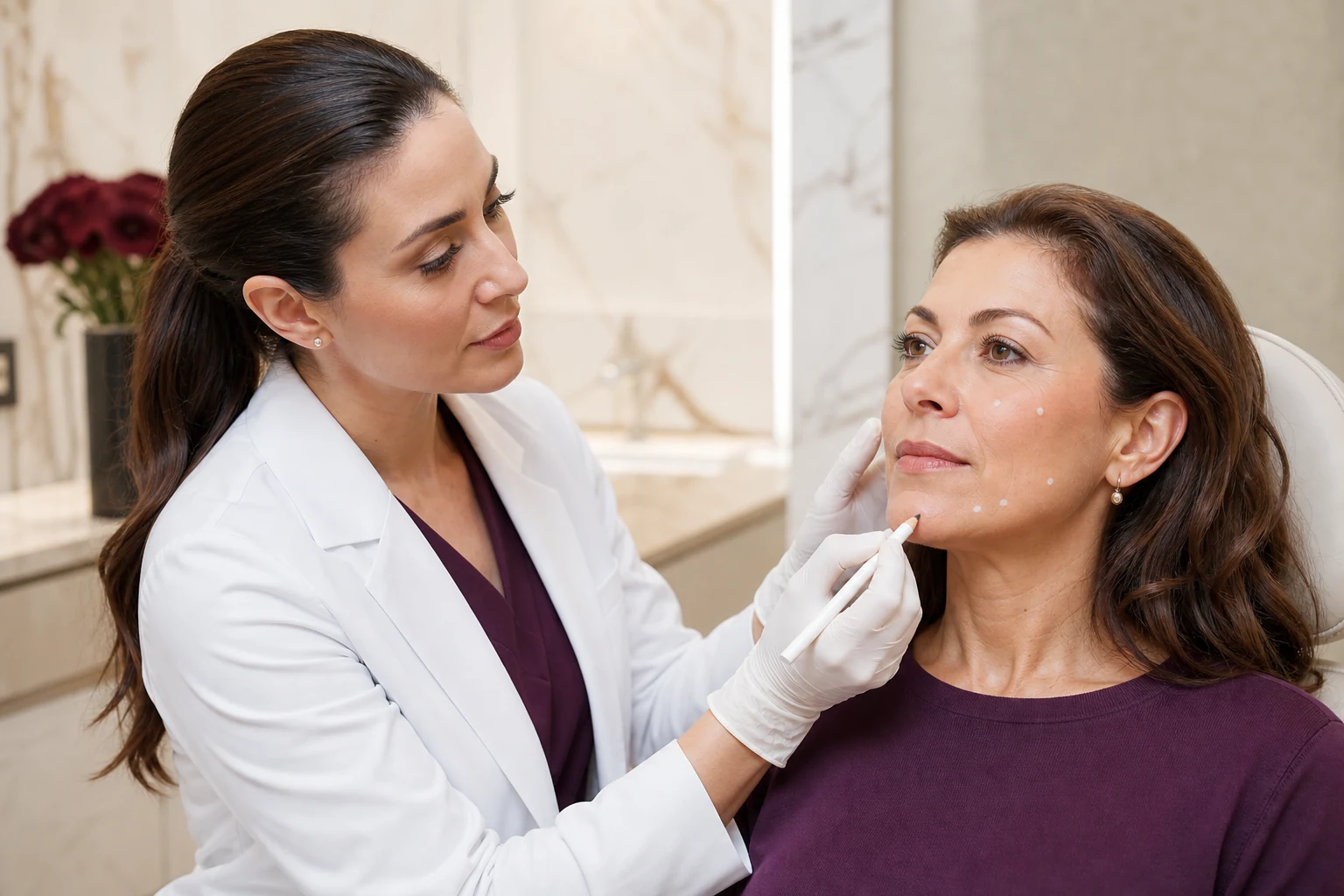
What should a dermal filler consultation include?
The clinician should understand what you want to change, assess your face at rest and in movement, and review health history, allergies, medicines, previous filler and recent skin or dental issues. You should discuss alternatives, the exact product and treatment area, likely limitations, common effects, serious risks and the follow-up plan before consent.
- Your goals and the features you want to preserve
- Medical conditions, allergies, medicines and pregnancy or breastfeeding
- Previous filler, dissolving treatments, surgery or dental work
- The proposed product, amount, placement, alternatives and total cost
- Expected settling time, review timing and emergency contact route
Which facial concerns may be assessed for filler?
Different products are designed for different tissues and approved uses. Suitability cannot be decided from a trend or photograph alone. The clinician should consider facial proportions, skin quality, movement, previous treatment and the risk profile of each anatomical area before recommending filler—or recommending no filler.
Shape, border definition, hydration and proportion can be discussed without assuming that more volume is the right goal.
Mid-face support may be considered when there is true volume loss or a structural contour goal.
Projection and lower-face balance are assessed together rather than treating one angle in isolation.
Nasolabial and marionette lines may reflect movement and wider volume changes, so direct filling is not always the only option.
Temple treatment requires careful anatomical assessment and an experienced medical injector.
Not every shadow or hollow is suitable for filler; skin quality, fluid tendency and anatomy can make alternatives more appropriate.
Medical sources
Dermal filler guide
Continue exploring the guide
Dermal filler guide
Begin with a clear assessment, not a ready-made package.
Discuss your goals, medical history, proposed product, risks and follow-up plan with an appropriately licensed professional before deciding.